From 2027, the UK will introduce a Carbon Border Adjustment Mechanism (UK CBAM), to ensure that certain imported goods face a carbon cost comparable to domestic production. The initial scope covers iron and steel, cement, aluminium, fertilisers, and hydrogen, with coverage expected to expand from 2029.
The framework will require importers to settle their obligations through the UK tax system administered by HM Revenue and Customs (HMRC). Goods covered by the UK CBAM will be subject to a financial liability upon import and each covered sector will have its own CBAM rate which will feed into this CBAM liability.
This liability is directly linked to the average of all UK Emissions Trading Scheme (UK ETS) auction clearing prices for the relevant quarter. UKAs represent the right to emit one tonne of carbon dioxide equivalent (CO₂e) under the UK ETS.
UK CBAM applies to specific commodity codes from included sectors.
Imports of CBAM-covered goods with a total value of less than £50,000 over the preceding 12-month period are exempt.
Also exempt include goods imported for non-business use, imported scrap products within the aluminium and iron and steel sectors, and, in specific situations, goods exported from Northern Ireland to the EU and then reimported into the UK. Indirect emissions will not be included in CBAM calculations until 2029 at the earliest.





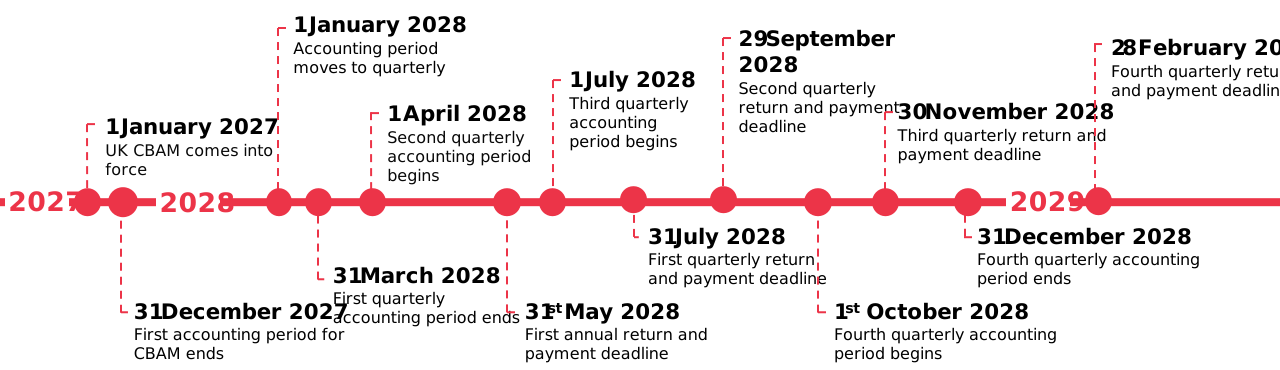


While the UK CBAM introduces new compliance requirements and cost considerations, exposure can be effectively managed through tailored risk management strategies, supporting more confident financial planning and procurement decisions.

The UK CBAM is significantly reshaping the cost of carbon-intensive imports. We designed the UK VCC® to help companies lock in UK CBAM costs today.
With the UK VCC® you can: